How to Grow Pink Oyster Mushrooms with a Grow Kit

How to Grow Pink Oyster Mushrooms with a Grow Kit

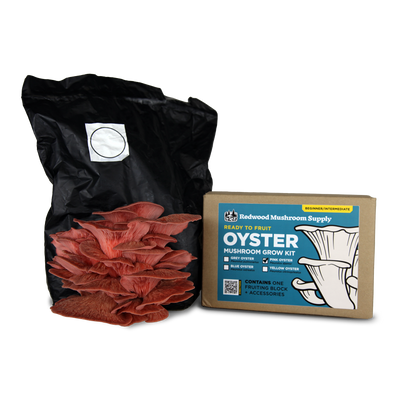
Grow vibrant Pink Oyster mushrooms at home with a fully colonized ready-to-fruit block from Redwood Mushroom Supply. Pink Oysters are fast-growing, colorful, and beginner-friendly when they have the right balance of humidity and fresh air.

Keep the block inside its plastic grow bag and fruit through one clean side X or 3–4 inch slit. Pink Oysters prefer warmer room temperatures, roughly 75–85°F (24–29°C), and should not be refrigerated. High fresh-air exchange is especially important once pins form.

If your mushrooms develop long stems with small caps, increase fresh air before adding more water. Avoid heavy direct misting on young pins and mushroom clusters.

How to get started

1

Cut Open Grow Bag

Using a clean knife, cut one X or 3–4 inch side slit into one side of the bag—it’s okay to cut into the sawdust! You’ll likely see white, pink, or yellow growth inside, which is healthy mycelium. If you notice green fuzzy mold, reach out for support.

2

Spray Your Grow Bag

Fill the included sprayer with filtered or distilled water and mist the cut area at least twice daily, or more often in dry conditions. Keep up this routine, and tiny mushrooms (“pins”) should appear in a few days. If not, you can loosely cover the block with a hole-punched bag to boost humidity.

3

Watch Your Mushrooms Grow

Pink Oyster mushrooms grow fast! They’re typically ready just a few days after forming pins and can double in size in 24 hours. 

Be sure to mist your mushrooms every day to keep them moist. You may need to mist them twice a day if you’re in a dry climate. As your mushrooms grow, keep an eye out for signs that they’re ready to be harvested. Refer to our harvesting guide below for more information!

4

Harvest Your Mushrooms

When the caps look like delicate, ruffled petals—fully colored and just starting to curl upward at the edges, like a rose in mid-bloom, they are ready to harvest. If they start to flatten or fade to pale pink or white, they’ve gone too far. Aim for that vibrant, frilly stage—where they look almost too pretty to pick.

To harvest, pinch clusters at the base, twist and pull to remove from the block. Spray block daily for second flushes.

Pink Oyster Mushroom Grow Kit

FAQs and Tips

How long does it take for Pink Oyster mushrooms to grow?

Pink oysters are one of the fastest-fruiting mushrooms you can grow — often producing their first harvest in just 7–10 days after fruiting begins. They thrive in warm, humid environments around 75–85°F (24–29°C). You’ll see vibrant pink clusters forming quickly, sometimes doubling in size overnight. Keep the air moist but not dripping, and avoid direct airflow that can dry out the caps.

Why is my Pink Oyster looking pale?

Pale or faded caps usually mean a lack of light or other conditions like humidity and airflow.  Pink oysters need consistently high humidity (around 90%) to maintain their bright color and tender texture. Mist the area 2–3 times daily and check that your grow tent or fruiting chamber is staying evenly humid. If the edges start to curl or feel dry, increase moisture and reduce direct fan exposure.

Pale caps can also be a sign of a harvest that is later than normal. As they age, they lose their color, so harvest when your oysters look like the ones in the guide photos. 

Can I harvest more than once from my Pink Oyster kit?

Yes — you can expect 2–3 flushes from a healthy kit. After the first harvesting, remove any leftover stem tissue. Keep the block inside its plastic grow bag.

If the block feels dry and light, place it with the original cut facing down in clean, cool water for 12–18 hours. Drain thoroughly so no water remains in the bag. If the block does not feel dry, skip the soak.

Cover the original cut securely with clean tape, leaving the bag’s filter patch uncovered. Make one new X-shaped cut or 3–4-inch slit on the opposite broad side. Return the kit to humid conditions with plenty of fresh air. Mist lightly around the new cut or mist the inside of a loose humidity cover, following the earlier growing steps. A second flush may take another week or two and is often smaller than the first.